Student Decision Journey
Would AI Recommend Your University?
AI-mediated college discovery is becoming more personal. Universities need more than visibility: they need credible evidence that helps AI systems understand when the institution fits a particular student.
Students no longer need to know your university’s name before evaluating it.
In EAB’s 2026 survey of more than 5,000 U.S. high school students, 46% said they use AI tools during college search, and 18% said information surfaced through AI-generated search led them to remove a college from consideration. In a separate survey of 2,515 parents, 57% had used AI to evaluate or compare colleges, while 34% said AI helped them discover institutions they had not previously considered.
That changes the discovery question for enrollment leaders. It is no longer only, “Can students find us?” It is also, “When a student describes what they need, does AI have enough evidence to understand when we fit?”
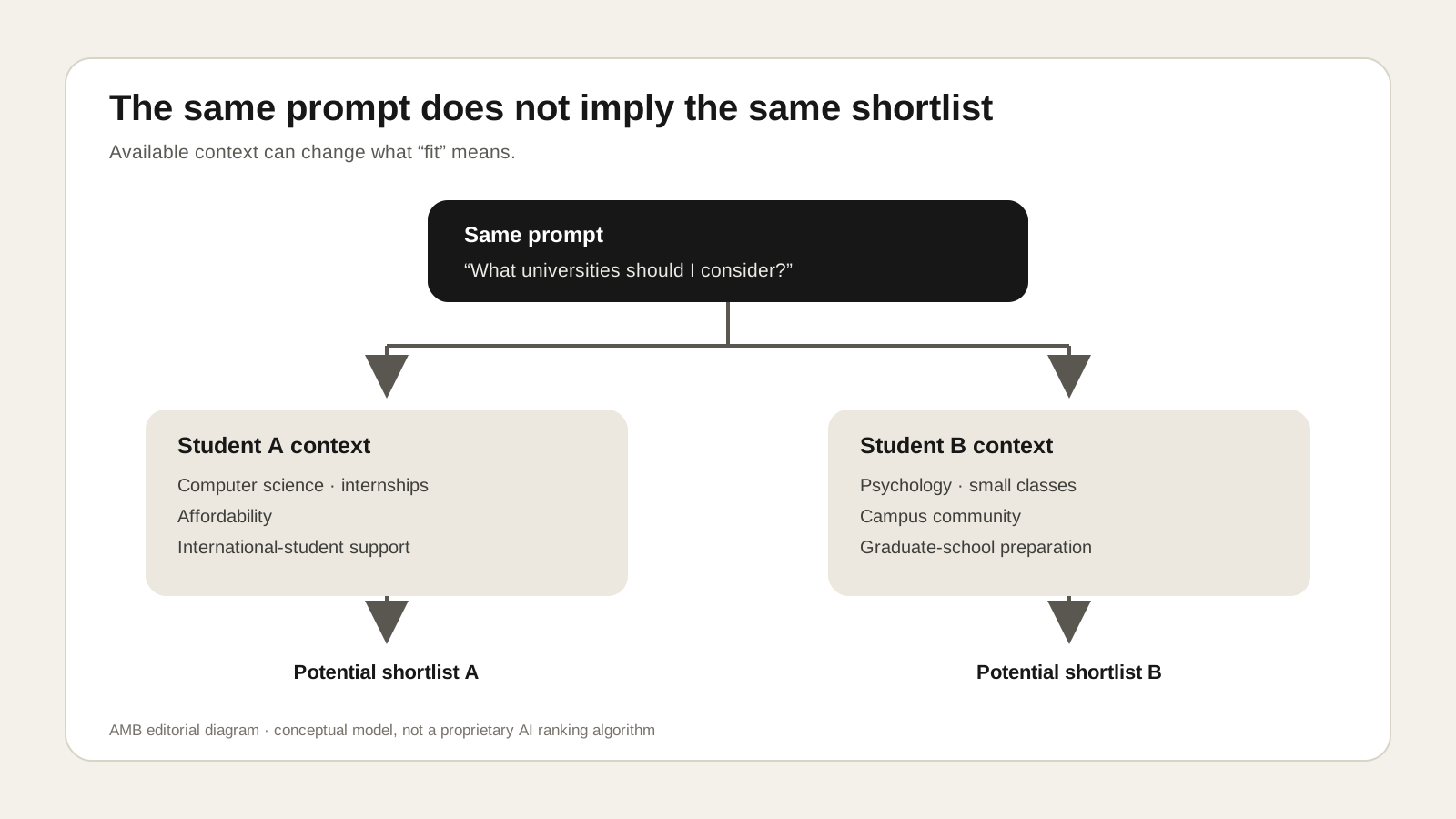
AI does not build one universal college list
There is no public formula showing exactly how ChatGPT, Gemini, or another AI system ranks universities. Institutions should be skeptical of anyone claiming to know a proprietary recommendation algorithm.
But the observable process can be understood at a practical level.
First, the system interprets the user’s question and available context. A student may specify major, budget, location, career goals, campus size, or international status. Depending on the product and settings, personalization can add relevant context from previous interactions. OpenAI states that ChatGPT can use memory and chat history to personalize responses, and relevant memories may help formulate search queries. Google has similarly introduced Gemini personalization using past chats and other user-authorized context.
Second, the system may retrieve current information. ChatGPT Search, for example, can rewrite a user’s question into targeted web queries and conduct additional searches as it develops an answer.
Third, the model synthesizes candidate institutions and evidence. It must connect what it can find about a university with what it understands the user to value.
Finally, it produces and explains a recommendation.
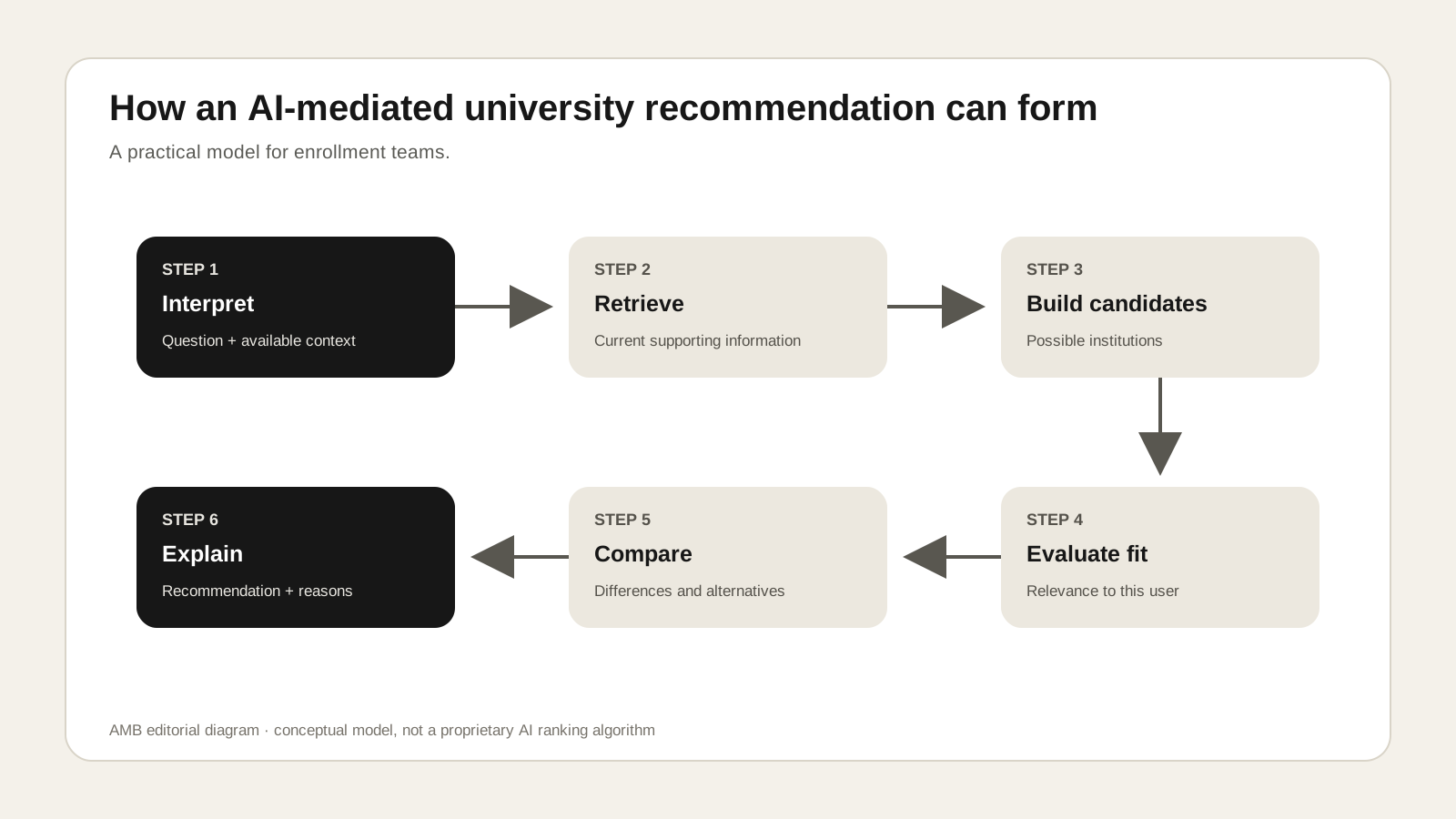
That means two people can ask the same short question and potentially receive different answers because their available context, follow-up conversation, location, settings, retrieved information, or model behavior may differ.
The constraint is often evidence, not visibility
Imagine two students asking for a California university with strong computer science, internship access, and a smaller learning environment.
A university may clearly state that it offers computer science. That establishes eligibility. It does not necessarily give an AI system enough evidence to explain why the institution fits those students better than alternatives.
The useful evidence may live elsewhere: class experience, faculty access, internship pathways, career outcomes, international-student support, scholarship information, student stories, location advantages, or employer connections.
The objective is not to publish more pages for AI. It is to build a broader, accurate evidence footprint around the real questions students and families use to evaluate fit.
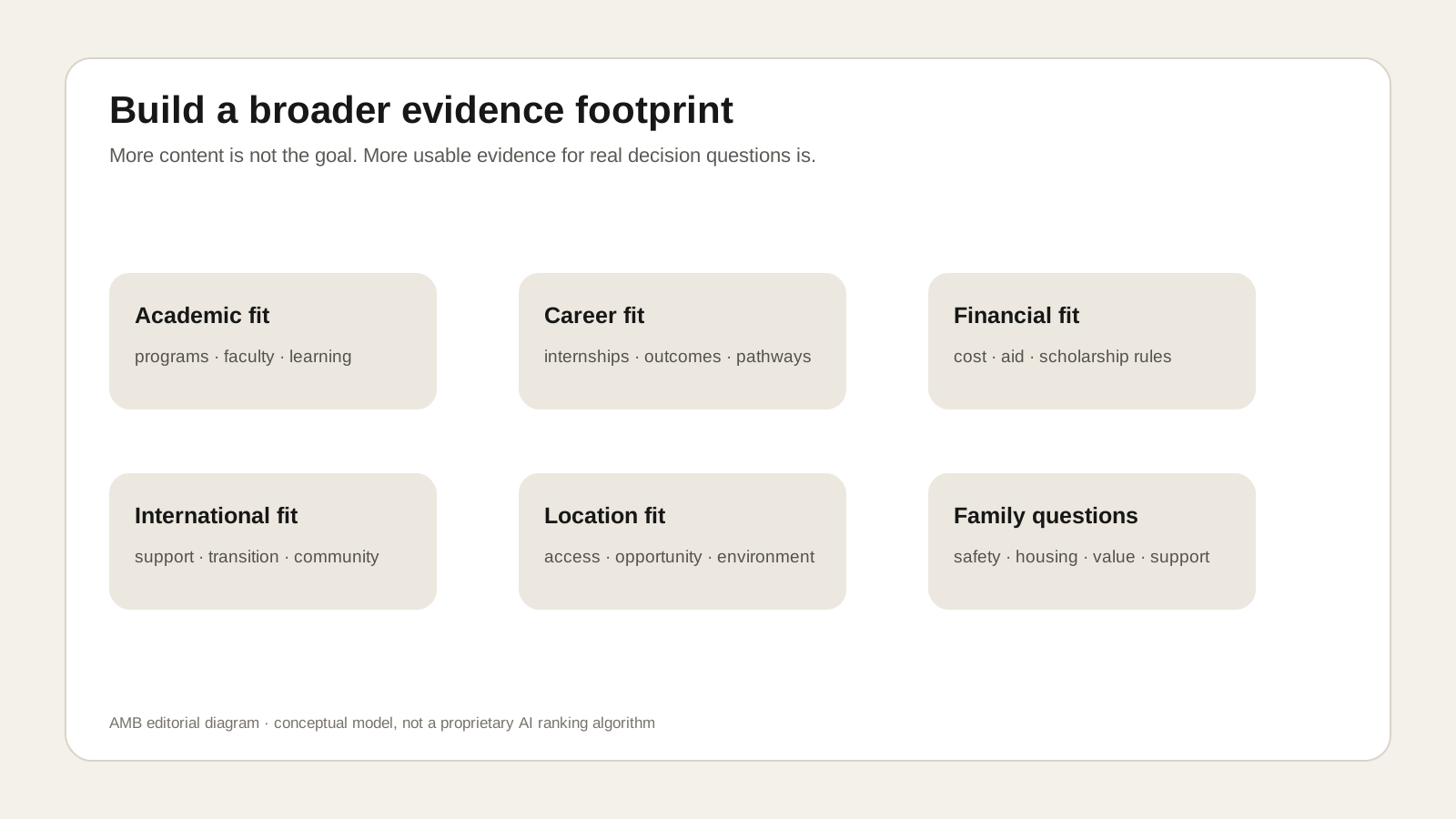
Build for different decision contexts
AMB approaches this as a decision-architecture problem.
Start with the audiences an institution can credibly serve. Map the questions each audience brings to discovery and consideration. Then identify the evidence required to answer those questions, where that evidence currently exists, and where important gaps remain.
The result may require institutional pages, academic departments, career content, student stories, FAQs, research, news, or market-specific content. In international markets, language, local platforms, family questions, and third-party information can create additional evidence environments.
This is where distribution matters. If AI-mediated discovery is increasingly contextual, one generic institutional description cannot represent every legitimate reason a student might consider the university.
Test the recommendation environment
Institutions can audit this without pretending to control the models.
AMB can build a structured prompt library around real prospective-student and family personas, then test discovery, comparison, and validation questions across relevant AI environments.
The audit asks: When is the institution recommended? When is it absent? Which competitors appear? What reasons are given? Which sources support the answer? Is the information accurate and current? Which decision questions lack usable evidence?
That creates a repeatable operating loop:
Understand → Evidence → Distribute → Test → Learn
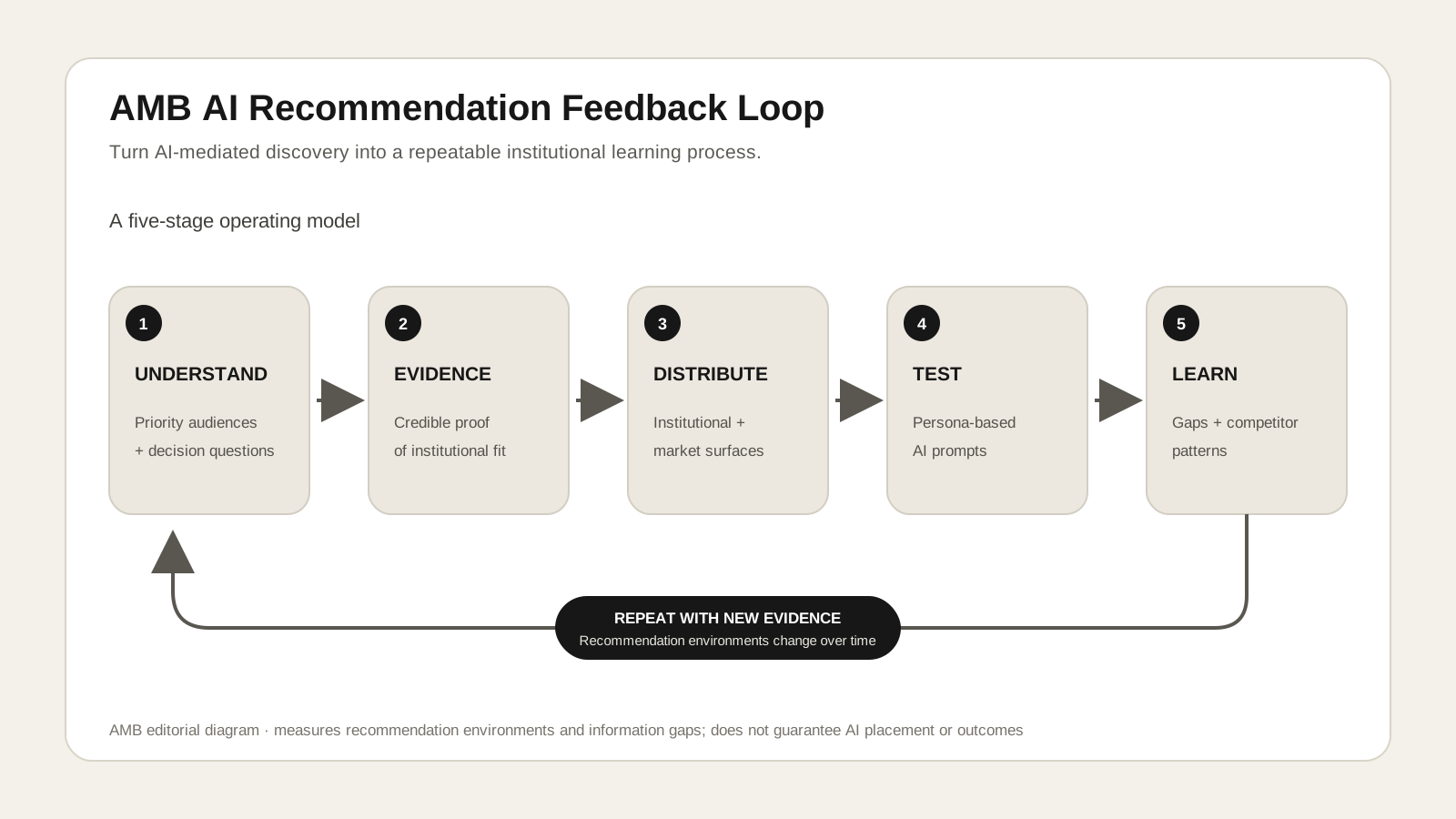
The predictable outcome is not more applications or guaranteed AI visibility. It is better evidence for an institutional decision.
Map priority audiences and questions → observe recommendation and citation patterns → measure coverage, accuracy, consistency, and evidence gaps → decide what content, distribution, or market infrastructure should change.
The goal is not to make AI recommend your university to everyone.
It is to give students—and the systems helping them decide—enough credible evidence to understand when your university is relevant.
AI Recommendation Review
See how your institution appears before a student reaches your website.
AMB can map priority student and family questions, audit the evidence AI systems can find, and test how your institution appears across structured discovery, comparison, and validation prompts. Anyone who contacts AMB may also receive, at no cost, a tailored research + strategy overview proposal of up to 20 pages and up to one hour of discussion with our team. There is no commitment required. We will provide candid, practical recommendations even if your institution decides not to proceed with AMB.
AMB Insights
Stay ahead of international enrollment shifts.
Get AMB Insights on international enrollment strategy, China-market intelligence, and market-specific enrollment infrastructure.